The Painter’s China
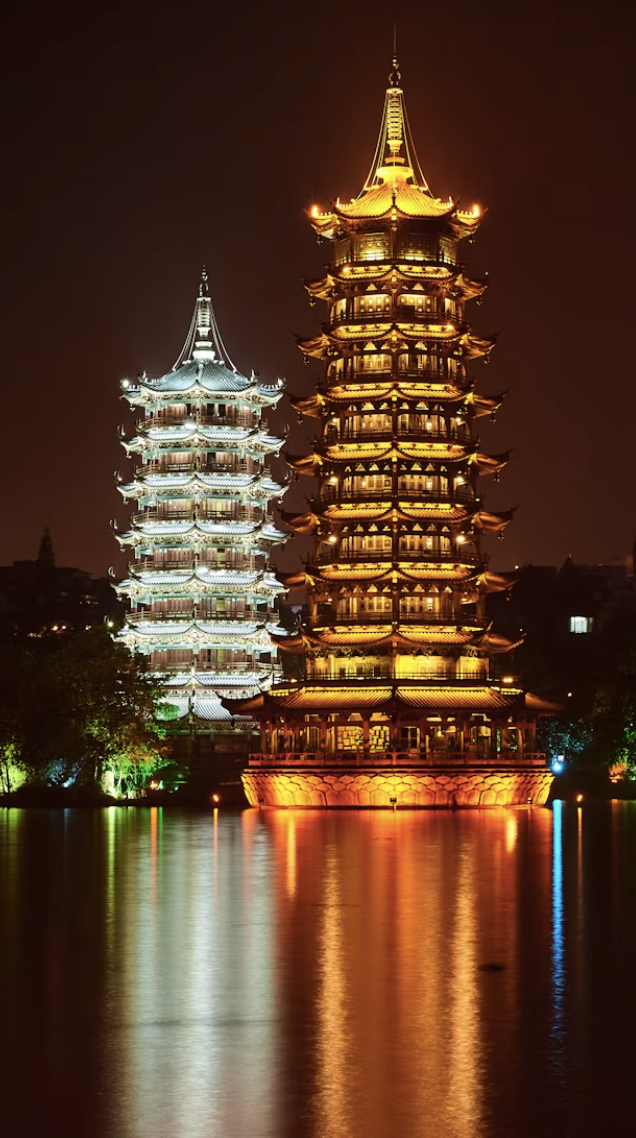
Some places make me want to write.
China makes me want to learn how to paint.
Not well.
Let's establish that immediately.
But there are landscapes that seem to require a different language. Mountains disappearing into white. Cobalt dragged across porcelain. A garden composed around the exact shape of an empty window. A thousand-year-old wall still carrying the color someone placed there by hand.
Maybe this isn't a trip about learning to paint at all.
Maybe it's about learning to look.
Here are five places I'd start.
INK | HUANGSHAN
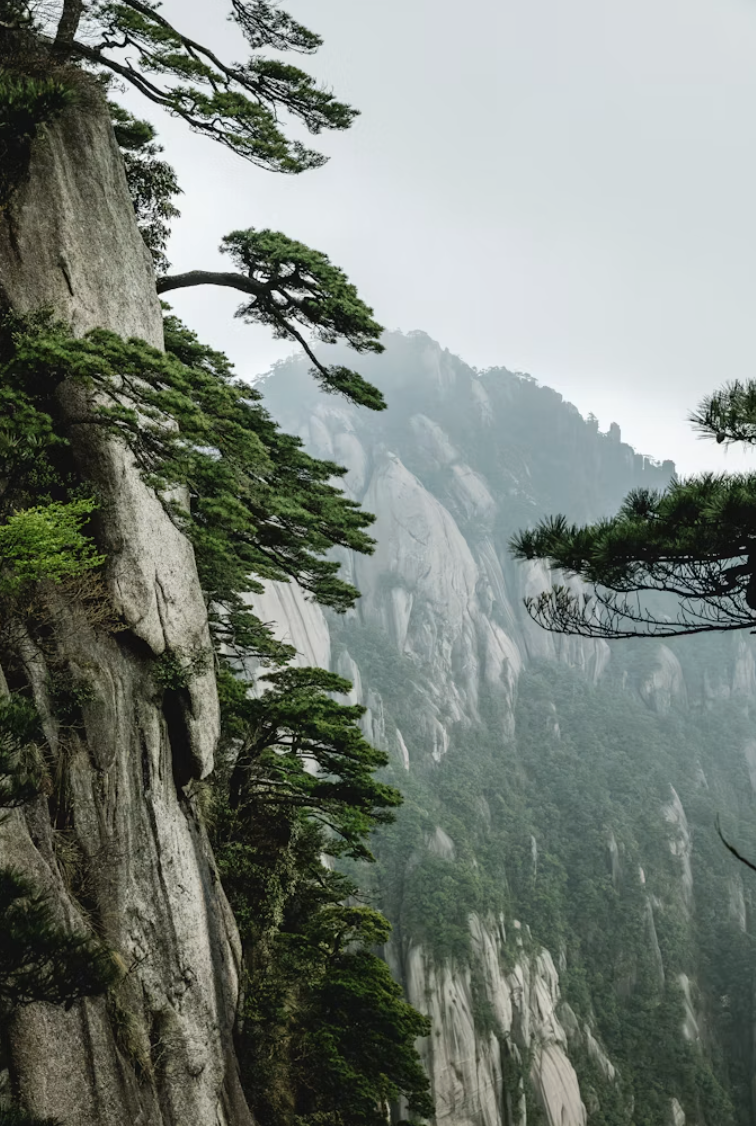
If you've ever looked at a Chinese ink painting of mountains rising through mist and thought, surely nowhere actually looks like that, go to Huangshan.
The granite peaks of the Yellow Mountains rise through clouds, interrupted by crooked pines, stone and enormous amounts of empty white space. The landscape has drawn poets and painters for centuries and became particularly influential in Chinese shan shui, or “mountain and water,” landscape painting.
And the emptiness matters.
In traditional ink painting, what isn't painted can be as important as what is. Mist. Distance. Air. The place where one mountain disappears before another begins.
LOOK FOR: negative space.
Don't only photograph the mountain. Look at what's happening around it.
THE QUESTION TO TAKE WITH YOU: What in my life might need more empty space around it?
COLOR | DUNHUANG
Then go west and forget everything you just learned about restraint.
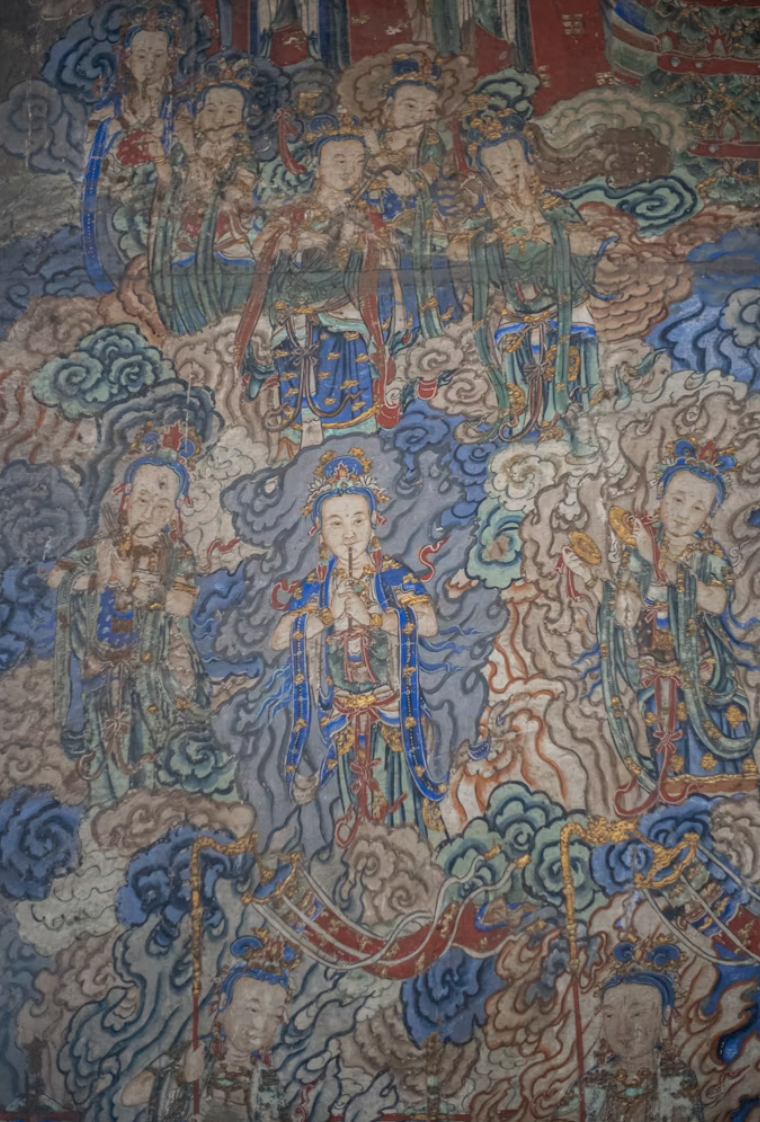
At the Mogao Caves near Dunhuang, hundreds of cave temples hold an extraordinary concentration of Buddhist painting and sculpture created across roughly a thousand years. The surviving murals cover about 45,000 square meters.
This is color as history.
Figures. Pattern. Fabric. Celestial beings. Stories moving across walls. Artistic influences carried along the Silk Roads and layered into the caves over centuries.
You could spend the entire trip thinking about one strange fact: somebody mixed pigment, lifted a hand and put that color there.
And somehow, you're looking at it centuries later.
LOOK FOR: The colors that survived. Notice what remains vivid after everything around it has changed.
THE QUESTION TO TAKE WITH YOU: What part of me has survived longer than I expected it to?
LINE | SUZHOU
Suzhou is where I would go to think about composition.
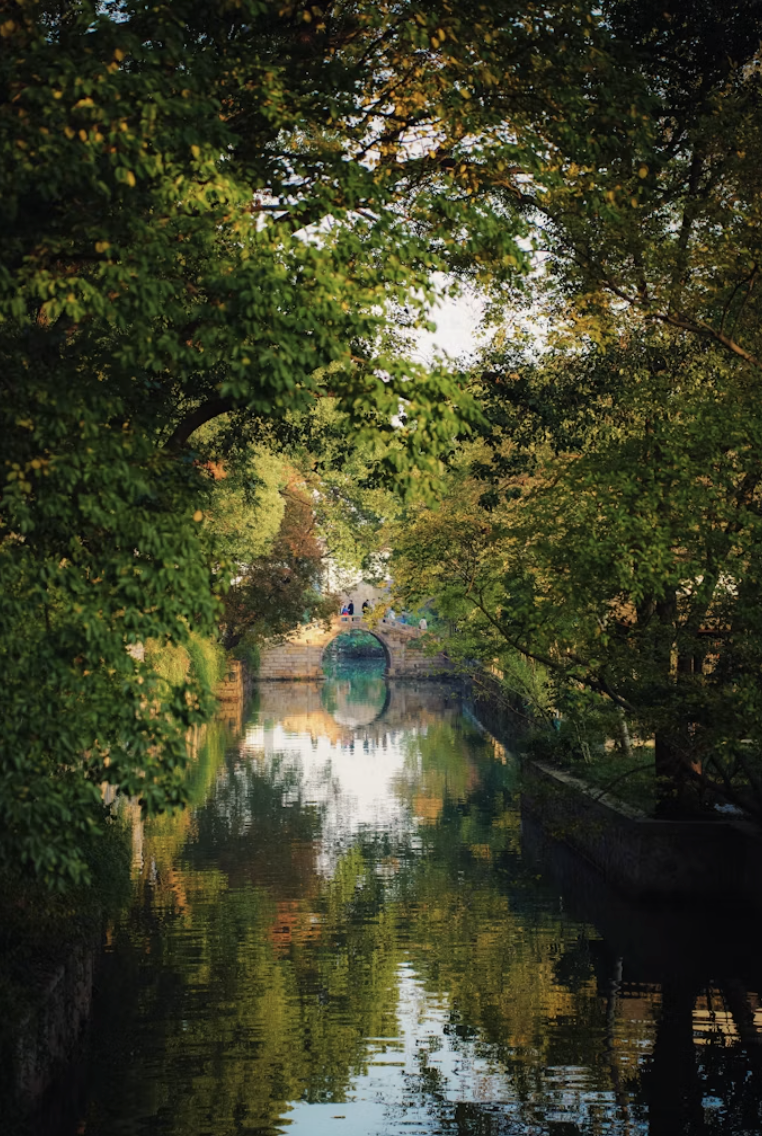
Its classical gardens aren't simply collections of beautiful plants. They're constructed views. Water, stone, architecture, plants, windows and corridors are arranged so that walking becomes a series of changing frames.
The gardens themselves were shaped in part by the freehand traditions of Chinese landscape painting.
Which means you aren't merely looking at a garden.
You're moving through something composed.
A doorway crops one scene. A lattice interrupts another. A crooked branch enters the frame exactly where you didn't know you needed it.
LOOK FOR: Frames inside frames. Take fewer photographs. Spend longer deciding where the edges should be.
THE QUESTION TO TAKE WITH YOU: What changes when I choose a different frame for the same story?
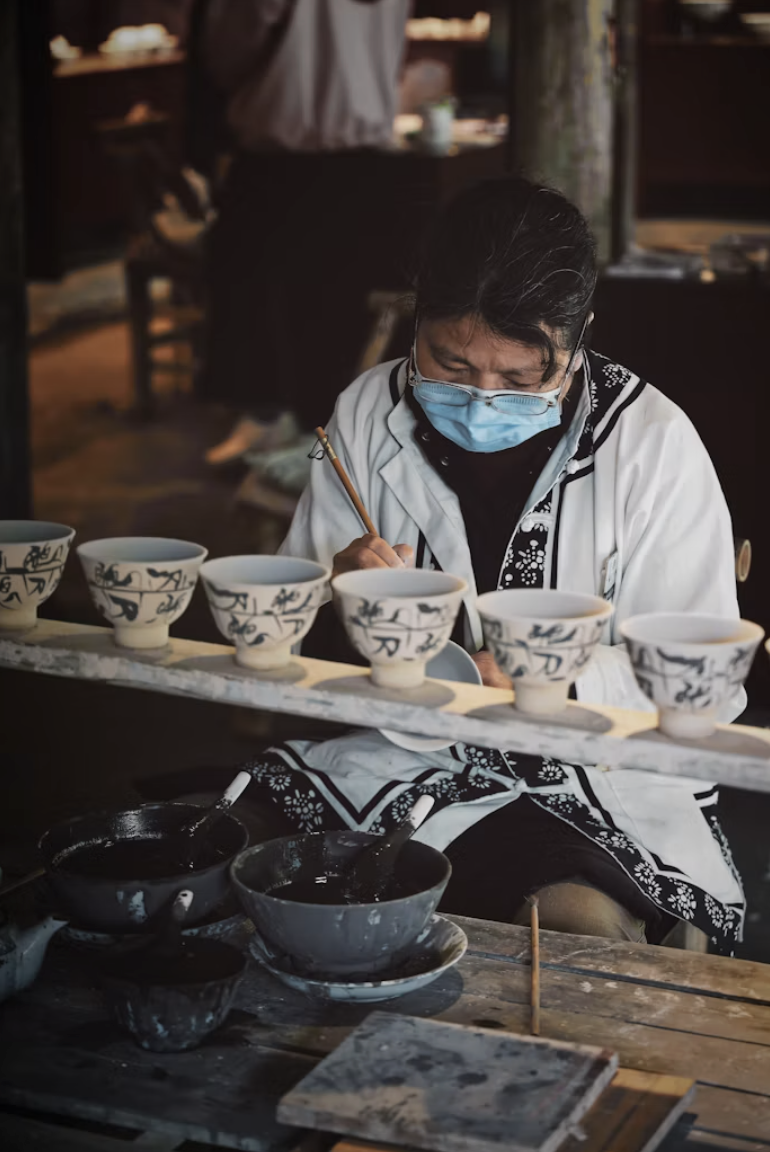
BLUE | JINGDEZHEN
For more than a thousand years, Jingdezhen has been synonymous with porcelain.
But what interests me here isn't simply the finished vase behind museum glass.
It's the hand.
Cobalt against white porcelain. Brush meeting curved surface. An image painted onto an object that will then meet fire.
There is something wonderfully Wanderslut about refusing to decide whether an object is art or something you eat noodles from.
Go to the workshops. Look at the brushes. Watch people making things.
And buy something made by a person if you can.
Not because you need another bowl.
Obviously you need another bowl.
LOOK FOR: The evidence of the hand. The slightly imperfect line may be the thing that makes you want to keep it.
THE QUESTION TO TAKE WITH YOU: Where am I trying so hard to make something perfect that I've erased myself from it?
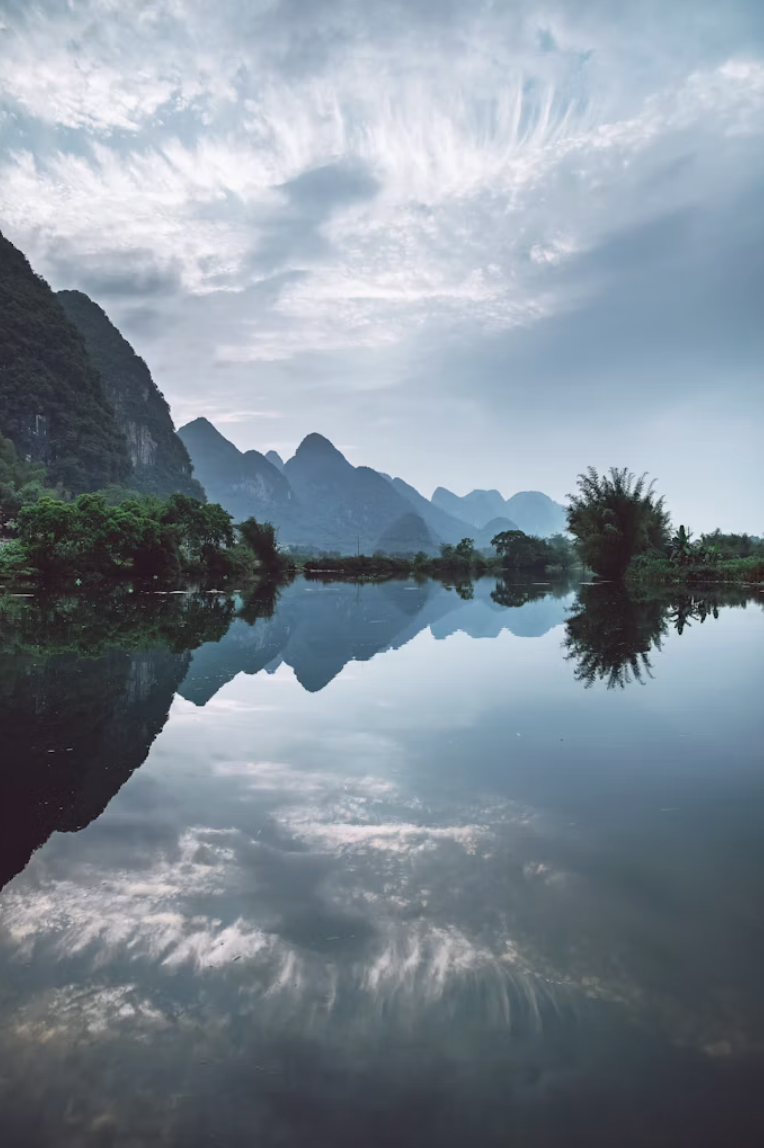
LIGHT | GUILIN + YANGSHUO
And then there is the landscape that appears to have painted itself.
Around Guilin and Yangshuo, limestone karst peaks rise beside the Li River in shapes that seem almost invented. Mist softens them. Water doubles them. Light changes the whole composition before you've finished looking at it.
This is where I'd stop trying to collect sights.
Get on the river. Walk. Bike. Sit somewhere.
Watch what happens to the same mountain when the light changes.
Morning gives you one painting.
Rain gives you another.
LOOK FOR: The moment the landscape disappears. Not the clearest view. The one you almost lose.
THE QUESTION TO TAKE WITH YOU: What am I noticing now because I know it won't stay this way?
THE PAINTER'S RULE
You do not need to know how to paint to take a painter's trip.
You don't need to know dynasties by heart or understand brush technique or be able to explain precisely what you're looking at.
You need to look longer.
At the mountain. At the blue line around the bowl. At the window someone placed precisely where the garden would become a picture. At pigment still clinging to a wall after centuries.
Maybe bring a sketchbook.
Maybe make something terrible in it.
Actually, I hope you do.
There are worse souvenirs than proof that somewhere made you look twice.